Office pod buyer’s guide 2026: How to choose the right pod for your business
Blog
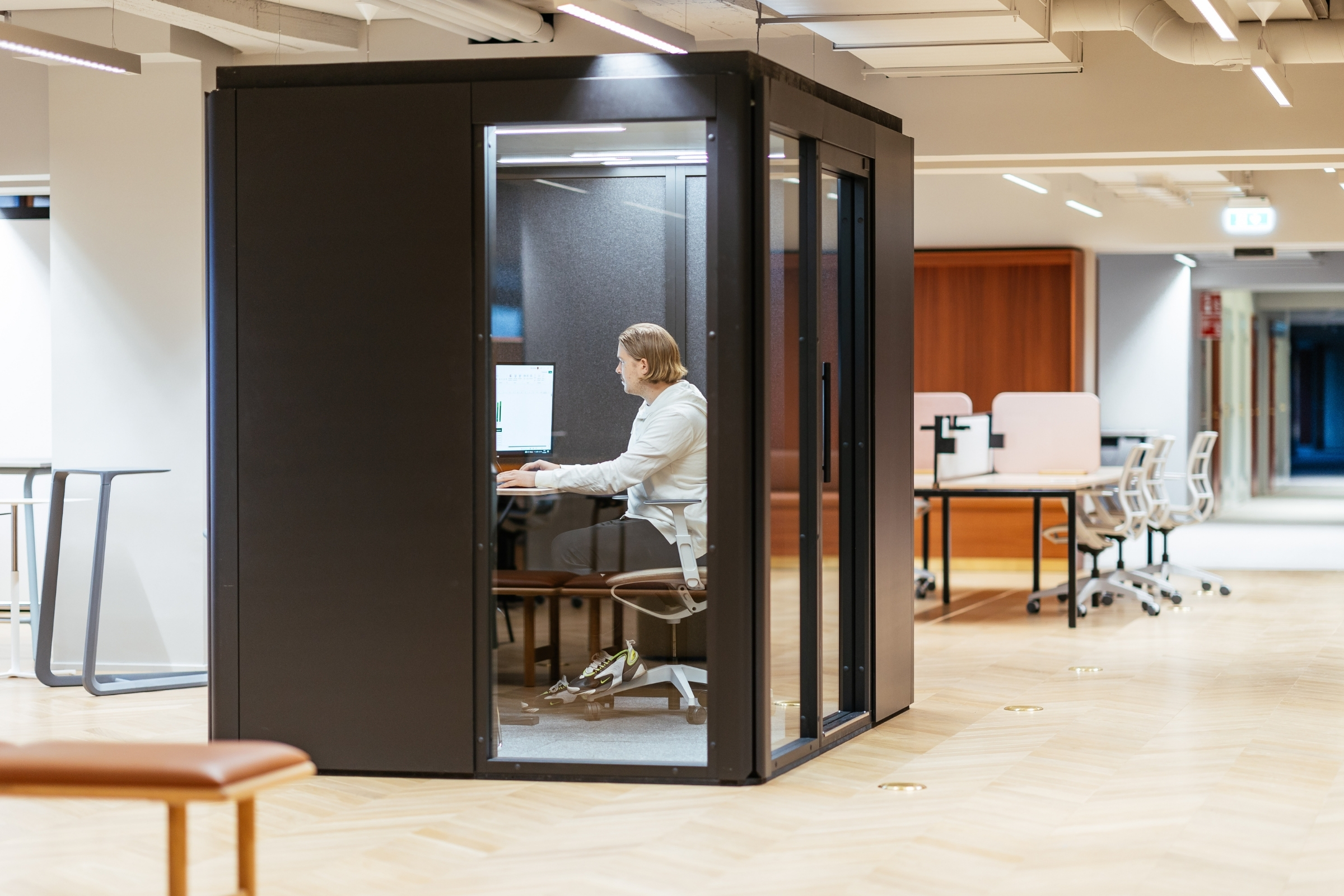
Most companies buying an office pod focus mainly on the price. Then, a couple of months later, it is sitting there unused. Not because it was a bad product, but because they chose the wrong type of pod for their needs, or the right type with ventilation or acoustics that did not hold up in daily use. This guide helps you avoid exactly that.
A typical workday in an open-plan office now involves a mix of video calls, hybrid meetings, focused work, and near-constant interaction with colleagues. Background chatter, Teams meetings, and people moving around add up to a low-level strain that many people do not notice until the end of the day. Research from the World Health Organization shows that excessive workplace noise negatively affects concentration, cognitive performance, and mental well-being.
An office pod can be a functional part of a well-planned workplace, a way to create focus, privacy, and smoother workdays without requiring structural changes. But not all pods solve the same problems, and choosing the right one has a direct impact on whether it stays in active use or gradually becomes something people stop bothering with.
Not all office pods are built for the same purpose
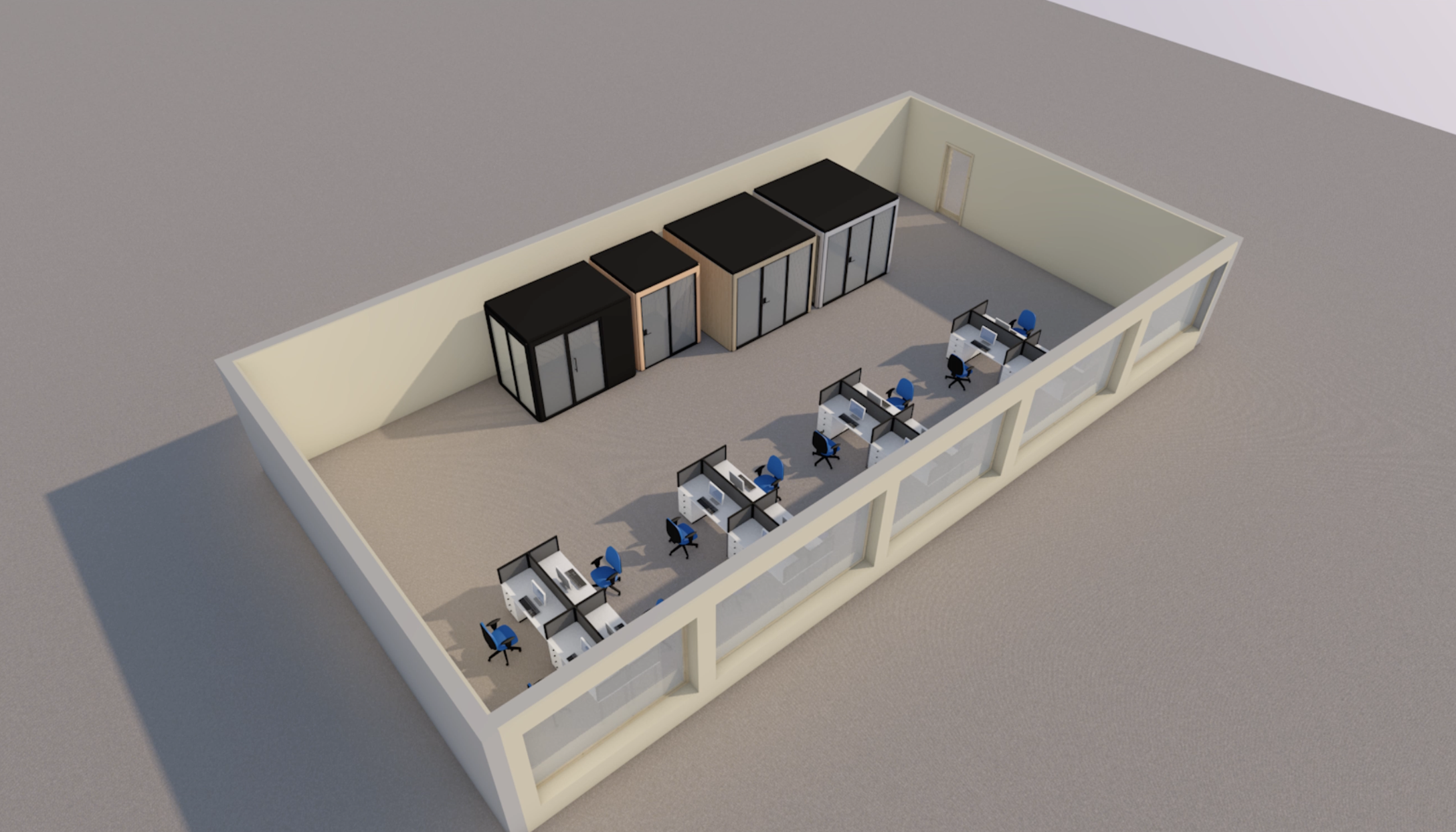
One of the most common mistakes when buying an office pod is trying to solve every need with a single solution. In practice, different types of work call for different types of space.
Phone booth for quick calls
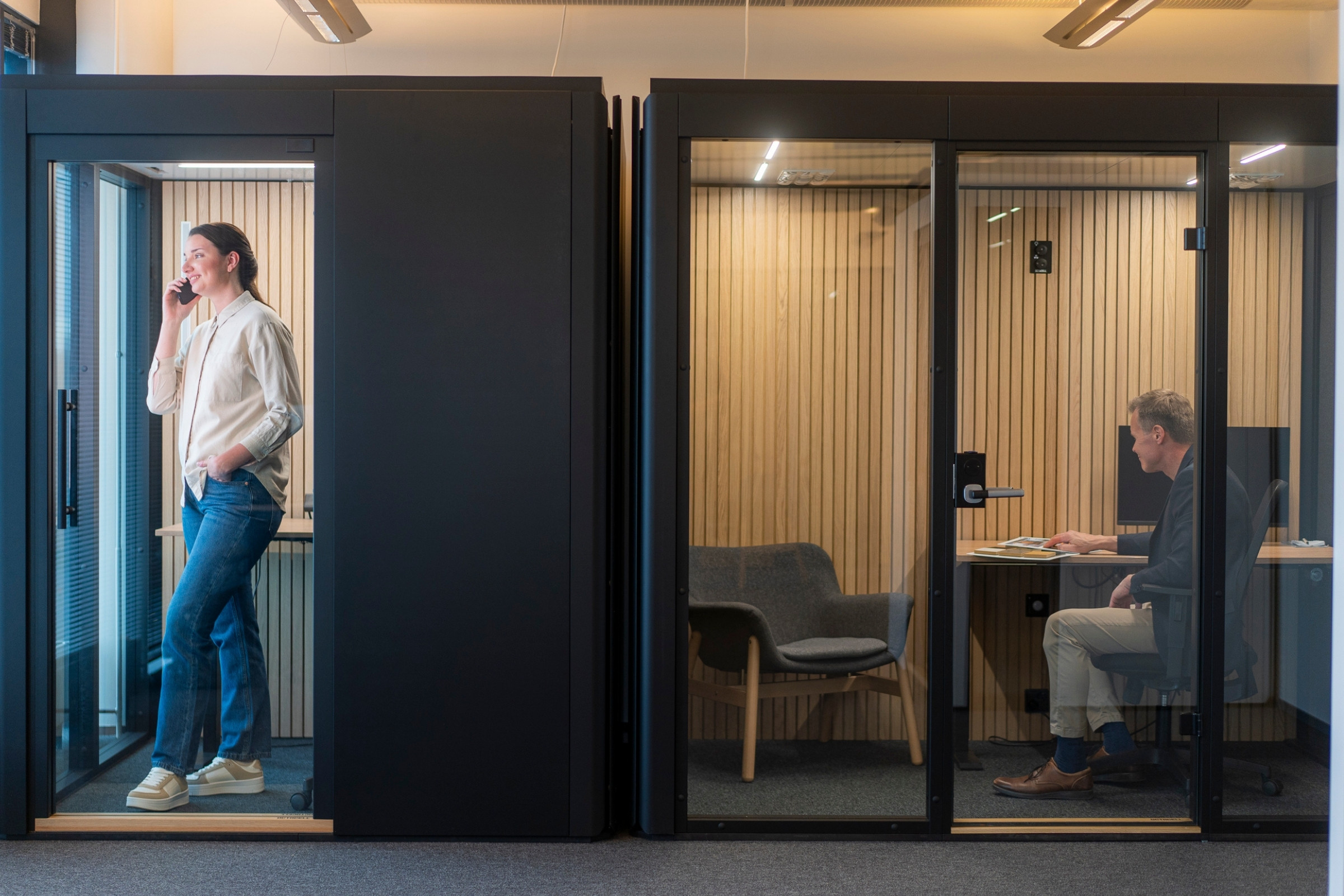
A compact phone booth works best for short calls and quick video check-ins. It takes up little floor space and can handle a high volume of use in a busy office.
Focus pods for deep work
A pod designed for focused work needs more room, better ergonomics, and, critically, proper ventilation. Most people find fairly quickly that a quiet space alone is not enough when they plan to work inside for hours at a time. Chair comfort, lighting, and air quality all have a real impact on the experience.
Meeting pods for hybrid work
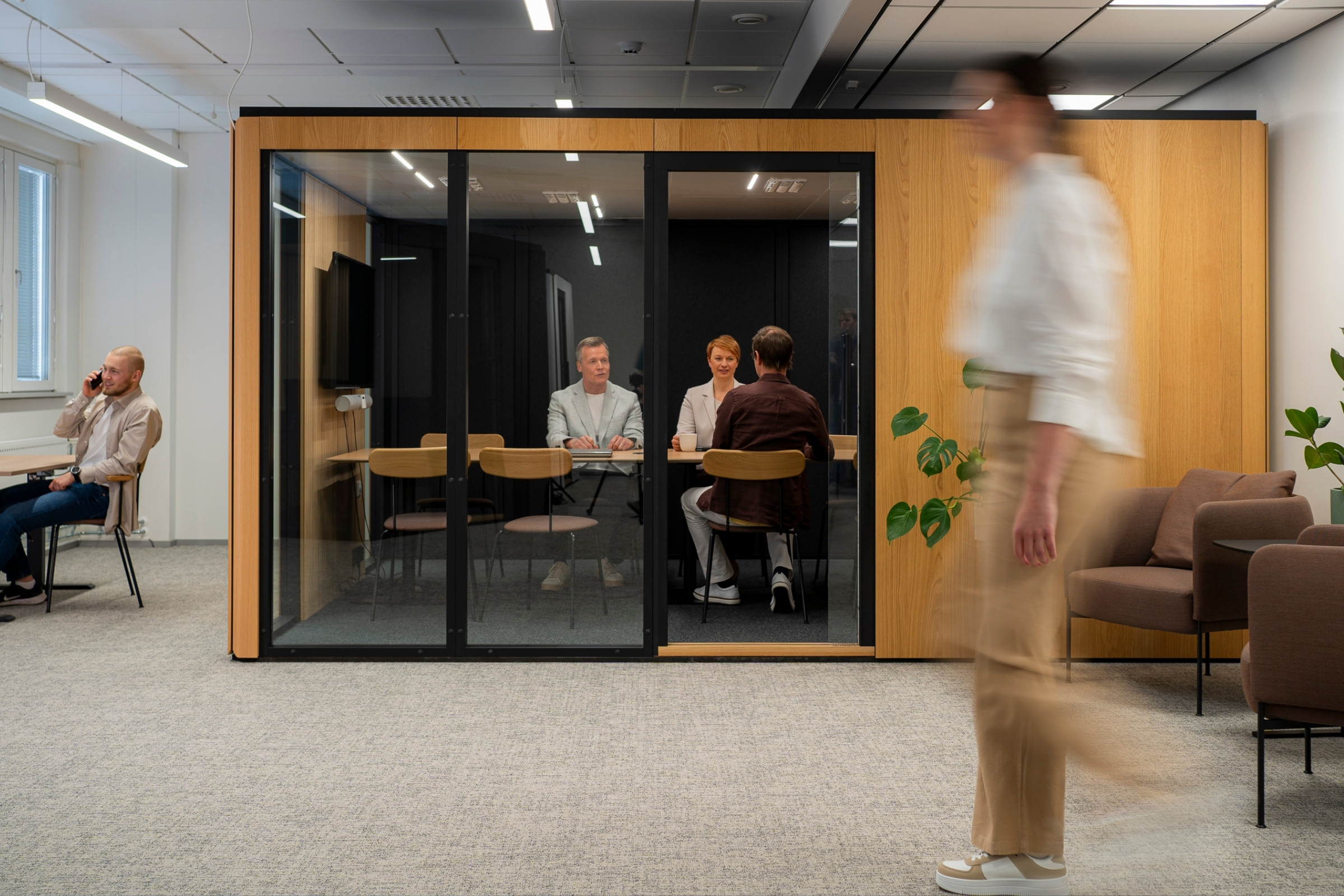
Multi-person pods are built for video meetings, hybrid collaboration, and confidential conversations. Here, the priority is speech privacy and solid acoustics, not just how much sound the pod blocks overall.
How to choose the right size
Size matters more than people expect. A pod that feels slightly tight on day one will feel genuinely uncomfortable within a few weeks. On the other hand, one that is too large takes up valuable floor space and may sit underused.
Smaller enclosures work well for quick calls and short video meetings. Space requirements grow fast the moment someone plans to work inside for longer stretches, use multiple screens, or need a proper ergonomic setup.
Many companies only realize in hindsight that they went too small. The pod seemed fine at first, then became a place people started avoiding.
Acoustics and ventilation: The two things that are hardest to get right
Sound insulation and ventilation are the most technically demanding parts of any office pod to design well. They are also the first things users notice when something is off, and they are nearly impossible to fix after installation. That makes them worth examining carefully before you sign anything.
Acoustics: What to actually check
Not every space needs the same level of sound insulation. In a loud reception area or open lobby, even a moderate level works fine because background noise naturally covers what leaks out. In quieter office environments, the requirements are higher since any sound that escapes will be more noticeable and potentially expose private conversations.
Some manufacturers pipe a masking sound outside the pod to make the acoustic performance seem better than it is. People working nearby may find that sound distracting, so it is worth asking whether a pod relies on masking to hit its numbers.
Marketing language around "sound insulation" varies widely between manufacturers, and measurement methods are not always consistent. A headline number alone tells you very little about real-world performance.
In practice, the goal is not perfect silence. It is speech privacy: the ability to have a conversation inside without being understood by someone standing just outside.
When comparing acoustic ratings, look for results based on the ISO 23351-1:2020 standard. This is the internationally recognized method for measuring speech privacy in office pods and enclosed workspaces. Under this standard, pods receive one of three ratings:
- Class A: very high speech privacy
- Class B: good speech privacy
- Class C: basic speech privacy
Reputable manufacturers will have the test results available, along with a full measurement report showing how and where the test was conducted. All Octacell products have been independently tested and certified to Class A under this standard.
Higher-rated solutions matter most in video meetings, confidential conversations, and busy open-plan offices.
Read more: What causes the most noise disruption in open-plan offices?
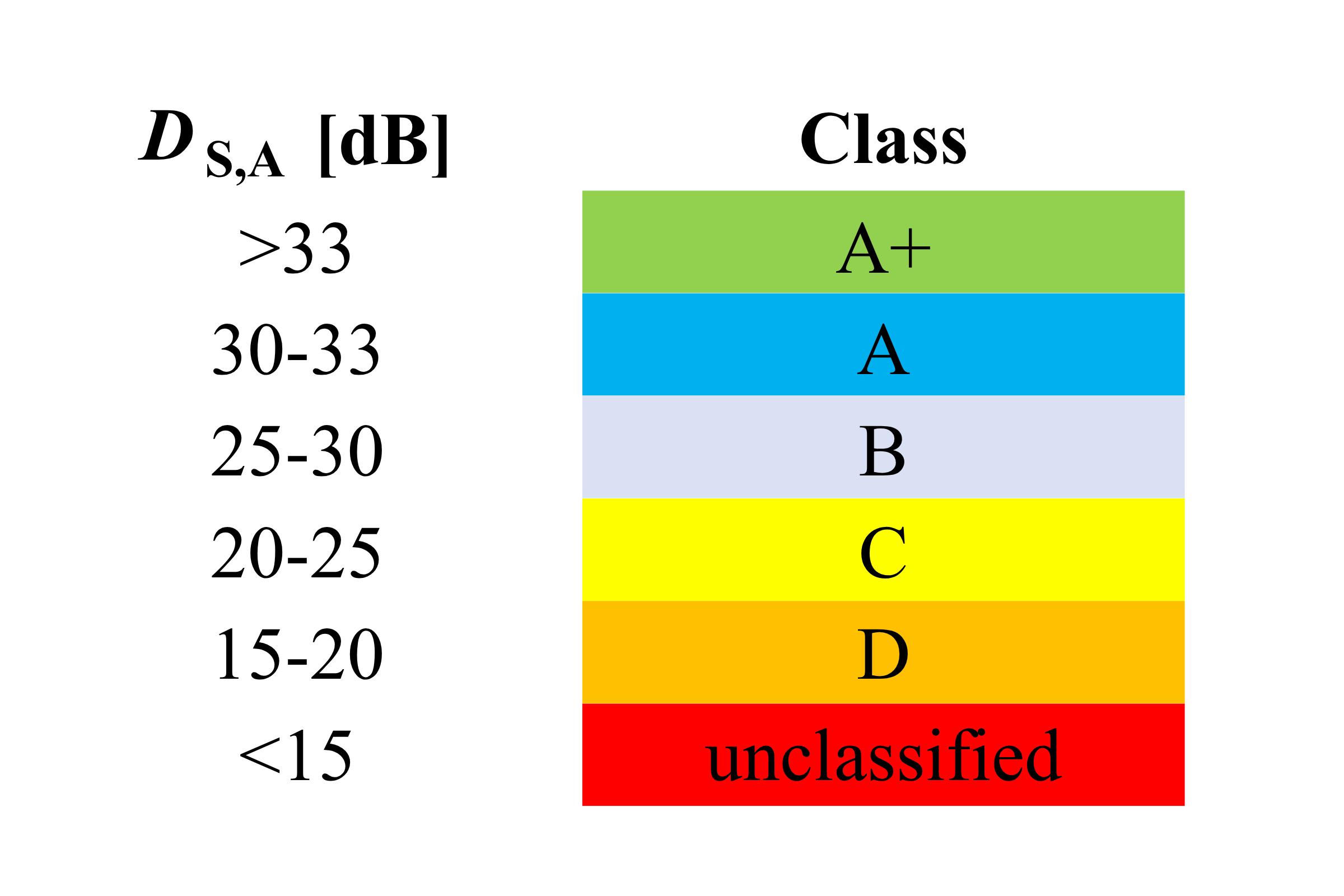
The ISO 23351-1 standard helps compare office pod speech insulation in different workplace environments.
Ventilation: How to verify it actually works
Many companies focus first on how a pod looks or what it costs. But poor ventilation is usually what drives people away from using one regularly.
The signs are easy to recognize: the space heats up quickly, the air starts to feel stale, and long video calls become genuinely draining. If a pod is being avoided a few weeks after installation, the cause is usually comfort, not design.
Good ventilation should be sufficient for active use, but quiet enough that you barely notice it.
A reasonable benchmark is at least 25 liters of fresh air per second per person. Quality manufacturers state this figure clearly in their specifications.
You can also do a simple physical check. Hold your hand near the air inlet: you should feel a clear, steady flow of air without any irritating hissing or rushing sound. The size of the inlet matters too. To achieve 25 liters per second, you need roughly a 100mm round opening or an equivalent rectangular slot of about 50 x 200mm. If the inlet looks small and the fan is quiet, the actual airflow may fall short of what is advertised.
It is also worth checking whether the ventilation creates noise that people inside or outside find disruptive, since excessive fan noise can undermine the very focus and privacy the space is meant to provide.
Good ventilation specs and a comfortable user experience almost always go hand in hand.
The day-to-day experience is what decides whether a pod gets used
The difference between a good office pod and a mediocre one usually shows up in the details of daily use, not in the product brochure.
A chair that cannot be adjusted properly means people avoid the pod for anything longer than a quick call. Power outlets in the wrong place force cables across the desk. Lighting that is too harsh or too flat makes you look tired on video calls. None of these is a dealbreaker on its own, but together they determine whether the pod becomes part of daily work or something people quietly stop using.
Placement matters more than most companies account for. A pod tucked behind a staircase or down a side corridor will sit underused regardless of how well it performs technically. The ones that get the most use tend to be those sitting naturally within the flow of where people already move: visible, easy to reach, and not requiring a deliberate detour to get to.
The best pods are simply the ones that do not require users to think about them at all.
Office pod pricing: What to actually evaluate
The cost of an office pod reflects its acoustic performance, ventilation capacity, size, materials, and how easily it can be adapted later. The purchase price alone does not tell you much about the actual value of the investment.
A unit that sits unused because it is uncomfortable delivers very little return, regardless of what it originally cost. To put it another way: in an office of 15 to 20 people, a well-placed focus pod or phone booth can free up concentrated working time worth far more than the purchase price within the first year. Interruptions are more expensive than most companies calculate.
A well-designed solution can reduce disruptions, support hybrid work, and improve the overall working environment for years.
A checklist before you buy
Before making a decision, it is worth working through at least these questions:
- What will the pod primarily be used for?
- What kind of space will it be placed in?
- How long will typical sessions inside the pod be?
- Is the ventilation rated for active, continuous use?
- Does the fan or masking noise cause distraction inside or outside the pod?
- Is the acoustic rating based on a standardized measurement?
- Will a proper ergonomic chair fit comfortably inside?
- Does the lighting work for video calls?
- Can the pod be relocated later if needed?
- How easy is it to change the pod's configuration as needs evolve?
A good pod makes the whole office work better
When calls, video meetings, and focused work move into spaces designed for them, the rest of the office naturally becomes calmer and easier to work in.
The best office pod is not one that stands out as a feature. It is one that nobody thinks about, because it simply works. People use it, leave it, and return to it naturally throughout the day. That is the standard worth measuring against.
The most reliable way to evaluate an office pod is to try one in a real setting. Acoustics, airflow, and overall comfort only become clear in actual use, not from a specification sheet. That is why many office pod manufacturers and resellers have showrooms where customers can experience the products in person before making a decision.
Octacell’s showrooms let you compare phone booths, focus pods, and meeting pods side by side in a real office environment and find the solution that best fits your workplace. You are welcome to book a showroom visit and experience the difference in person.
Frequently asked questions
What is the difference between a phone booth and a focus pod?
A phone booth is compact and designed for short calls and quick video check-ins, typically for one person without a desk. A focus pod is larger, with room for a proper ergonomic chair and a work surface, and is built for longer sessions where comfort and concentration matter more.
Do I need to connect an office pod to the building's ventilation system?
No. Most office pods have built-in ventilation systems and only require a power connection. This is one of the reasons they can be installed without construction work and relocated if needed.
How much acoustic insulation does an office pod actually need?
It depends on your office environment. In quieter spaces, speech privacy matters more because even small amounts of sound leakage will be noticeable and could expose confidential conversations. In louder environments, background noise provides natural cover. Always check whether the acoustic rating is based on ISO 23351-1:2020 and what class the pod has achieved.
Why do some office pods end up barely used?
The most common reasons are inadequate ventilation, a space that feels too small for longer sessions, poor ergonomics, or a location that is slightly out of the way. User experience determines whether a pod becomes part of daily work or gets quietly ignored.
Can an office pod be moved or reconfigured after installation?
It depends on the manufacturer. Octacell's pods can be relocated after installation and later expanded, downsized, or reconfigured with different doors, window layouts, and color options as your needs change.